


Hyundai’s $15.5bn India bet may not be enough to reclaim No. 2 spot
The Korean group is expanding factories, engineering, suppliers and its product range. But restoring Hyundai’s lost position in India will require more than capital: it will require a faster response to a market its rivals have learnt to read better.
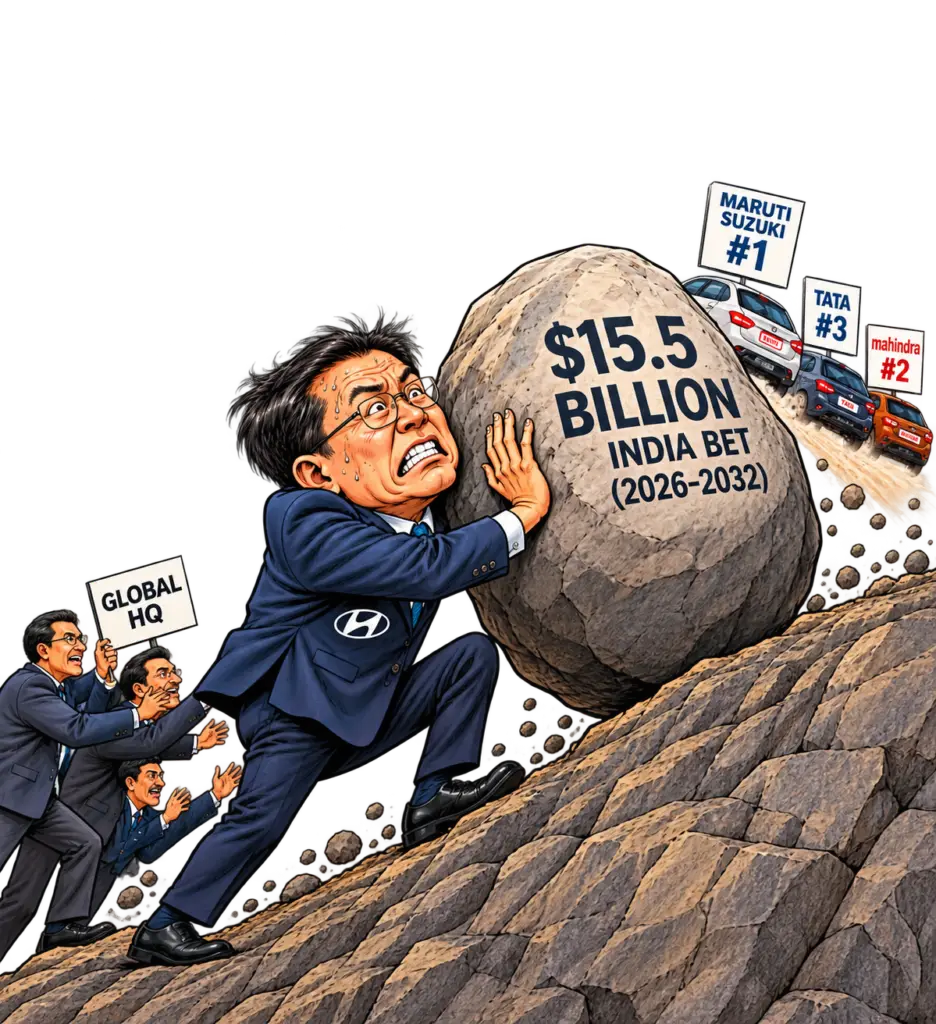
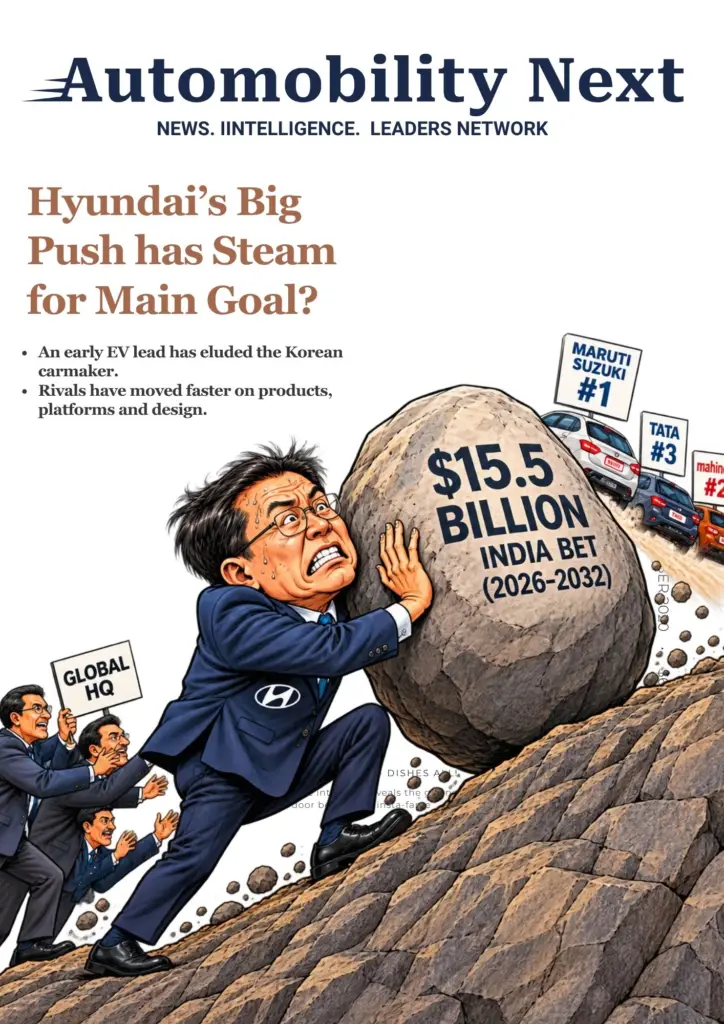
Hyundai Motor Group is committing $15.5 billion to India between 2026 and 2032, reinforcing the country’s importance as a manufacturing, engineering and export hub. The investment comes as Hyundai Motor India has lost the No. 2 position it held for much of two decades and faces increasing competition from Tata Motors and Mahindra & Mahindra.
The investment covers manufacturing expansion, research and development, supplier localisation and future technologies. It builds on Hyundai Motor India’s separate ₹45,000-crore investment roadmap announced in October 2025, which includes 26 launches and product updates, seven new nameplates, entry into the MPV and off-road SUV segments, and a locally manufactured electric SUV.
The two commitments should be viewed separately: the $15.5-billion investment is a group-level commitment covering Hyundai, Kia and the wider ecosystem through 2032, while the ₹45,000-crore programme is Hyundai Motor India’s own roadmap through FY2030.
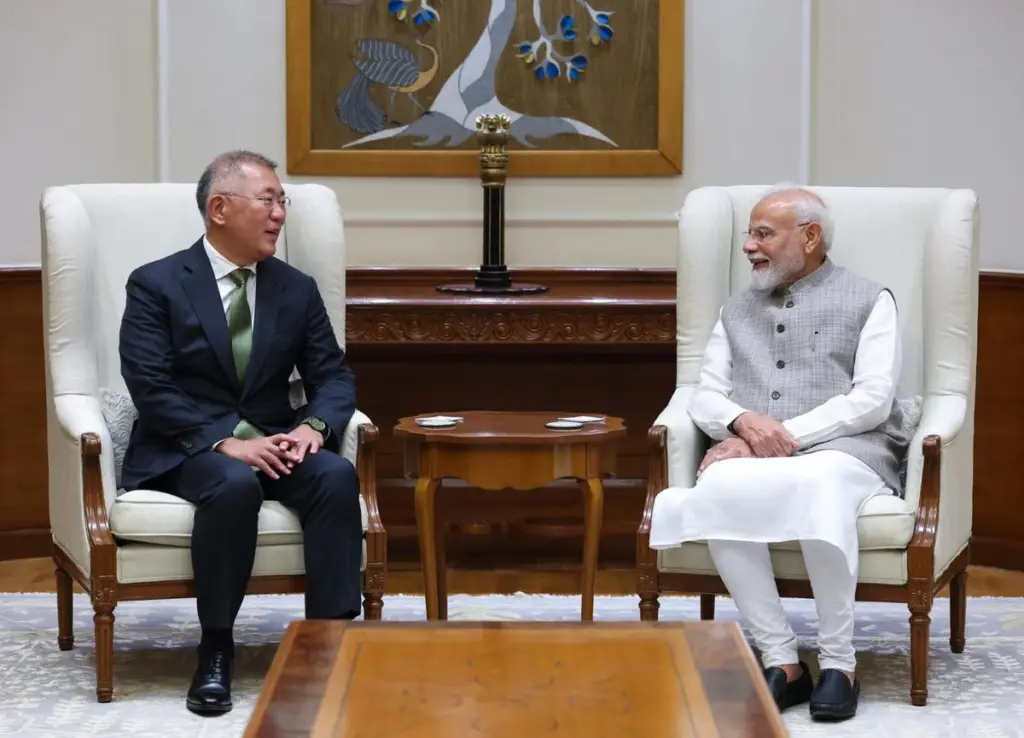
A leader losing ground

Hyundai’s competitive position has weakened as domestic manufacturers have gained ground. Its passenger-vehicle market share declined to 12.50% in calendar 2025 from 13.76% a year earlier, pushing it to fourth position.
The challenge is not a deterioration in manufacturing capability or financial strength. Hyundai continues to have an established dealer network, export operations and global engineering resources. The issue is that Tata and Mahindra have responded more effectively to changing demand, particularly in SUVs and electric vehicles.
One of the biggest reasons for Hyundai’s loss of ground has been its relatively slow response to India’s electric passenger-vehicle market. Tata recognised the opportunity early, invested in a broad EV portfolio and established a strong market position. Mahindra followed with a dedicated electric vehicle strategy.
The gap is evident in FY2026 market shares: Tata accounted for approximately 39% of India’s electric passenger-vehicle market, Mahindra around 23.9%, while Hyundai’s share was approximately 2.5%.
Mahindra had signalled its ambitions as early as 2022, when it showcased its Born Electric vehicles in the UK and announced investments involving British International Investment. Its subsequent commitment to EV manufacturing and development in Maharashtra further strengthened its position.
These were important competitive signals. Hyundai had the financial resources, engineering capabilities and global technology to respond more aggressively, but its mass-market EV presence remained limited. Its relatively late push has allowed domestic competitors to establish stronger positions in a segment that will become increasingly important.
The EV gap is not the only explanation for Hyundai’s declining market share, given the still-limited contribution of electric cars to overall passenger-vehicle sales. However, it highlights a broader issue: the company has not always responded to emerging market opportunities with the speed of its domestic rivals.
Product launches and design matter
Hyundai’s product pipeline was relatively thin in 2021 and 2022. Although the company introduced the Exter, redesigned Verna and Ioniq 5 in 2023, its market-share decline continued.
Tata has built a presence across petrol, CNG and electric vehicles, while Mahindra has strengthened its SUV portfolio with new platforms and products.
Hyundai continues to depend significantly on established models such as the Creta. While these remain important contributors, the company needs more products that can compete independently across emerging segments.
Design is another area of competition. Tata and Mahindra have introduced SUVs with distinctive styling and strong road presence. Hyundai needs to ensure its upcoming products offer clearer differentiation in design, features, pricing and customer appeal.
Its planned 26 launches and updates should improve portfolio coverage, but the key will be the number of genuinely new products, their market positioning and their ability to generate incremental demand.
Manufacturing expansion is only part of the answer
Hyundai’s Talegaon facility in Pune has begun operations, adding capacity beyond its existing Chennai operations. The company plans to increase consolidated annual manufacturing capacity to approximately 1.14 million units by 2030.
The expansion will support new product launches, exports and greater localisation. Flexible manufacturing capabilities will also allow the company to accommodate different powertrains, including internal combustion and hybrid vehicles.
However, additional capacity will deliver returns only if domestic demand improves. Manufacturing scale can improve costs and supply, but it cannot independently address product relevance, pricing or consumer preferences.
The importance of local engineering
Hyundai’s investment includes approximately $700 million for India’s R&D infrastructure, including a vehicle testing track. The company also plans to strengthen local engineering capabilities and supplier partnerships.
Greater local R&D involvement could shorten product development cycles, improve localisation and help Hyundai respond more effectively to Indian market requirements. India needs to play a larger role in product development rather than remain primarily a manufacturing and export base.
Localisation will also be important for EVs, batteries and future technologies, where domestic suppliers and manufacturing capabilities are becoming increasingly relevant.
Financial strength, but execution will matter
Hyundai India remains financially sound, but its recent performance reflects pressure on profitability. FY2026 consolidated revenue stood at ₹70,763 crore, while net profit was ₹5,432 crore, compared with ₹6,060 crore in FY2024.
The ₹15,436-crore dividend paid to its parent in FY2024 and the 2024 IPO, which was an offer for sale rather than a fresh capital issue, also raise questions about capital allocation, although they do not establish that investment was withheld.
Hyundai now needs to balance spending across manufacturing, product development, EVs, hybrids, localisation and exports. Managing these priorities and ensuring timely execution will be critical.
The multi-billion dollar commitment strengthens Hyundai’s long-term presence in India, but investment alone will not restore its market position. The company must close its EV gap, broaden its product portfolio, improve design differentiation and respond faster to changing consumer preferences.
Maruti Suzuki’s sustained leadership underlines the importance of consistency and market relevance. Hyundai’s challenge is to translate its investment into products that can compete effectively with Tata and Mahindra. Ultimately, its recovery will be determined not by the size of its investment, but by how effectively it converts that investment into customer demand.
Related Stories

BMW to launch Alpina in India in 2027, media reports say | Why the top end matters
BMW Group plans to bring Alpina to India in 2027 as a standalone ultra-luxury brand, according to media...
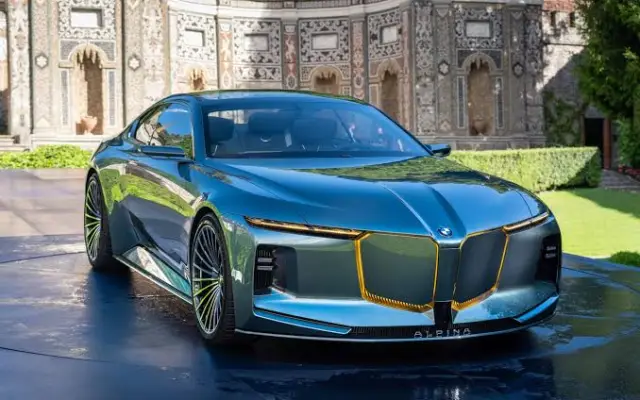
Why are luxury car brands Alpina, Genesis and Denza rushing to India?
A 52,000-unit market with a fast-growing top end, 944,000 millionaires and EU duty cuts on the way is...
Saudi’s Ceer borrows SAR 2.6 billion for its factory push: Can a premium launch win a market BYD is running away with?
Saudi’s Ceer borrows SAR 2.6 billion for its factory push: Can a premium launch win a market BYD...