


Why are luxury car brands Alpina, Genesis and Denza rushing to India?
A 52,000-unit market with a fast-growing top end, 944,000 millionaires and EU duty cuts on the way is drawing new brands. JATO Dynamics expects about 70,000 units a year by 2030, but Tesla’s slow start shows how hard India can be for newcomers.
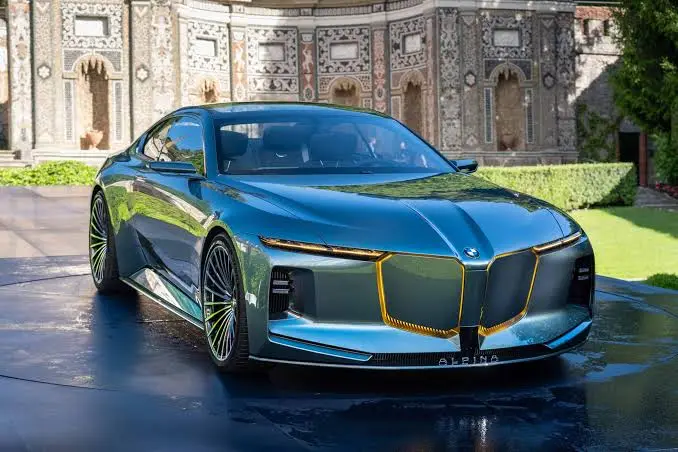
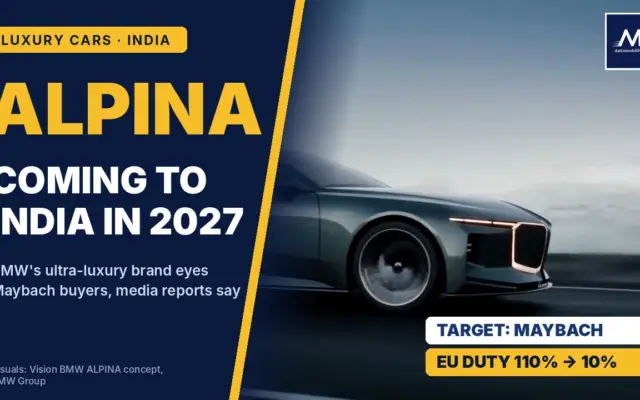
German carmaker BMW plans to launch Alpina, its ultra-luxury brand, in about ten Indian cities in 2027, media reports suggested. It would be the fourth new push into the top end of India’s car market in a year. A week earlier, Chinese EV maker BYD launched Denza, its luxury brand, with two imported electric models: the D9 MPV at INR 90 lakh (USD 0.10 million) and the Z9 GT at INR 1.57 crore (USD 0.17 million).
South Korean carmaker Hyundai has said its Genesis brand will follow in 2027 with locally assembled cars. And on October 27, British-Indian luxury carmaker JLR began assembling the Defender 110 in Pune, cutting its price by up to INR 34 lakh (USD 0.04 million).
At first glance the rush looks odd. India’s luxury car market, covering vehicles priced above INR 50 lakh, sold about 52,000 units in calendar 2025. That was up just 1.6%, and barely 1% of all passenger-vehicle sales. But the headline number hides where the money is. Mercedes-Benz says sales of its top-end models, from the S-Class and Maybach to the AMG range, rose by more than 20% in January-June 2026 and made up 28% of its volume. Nearly half its S-Class buyers now choose a Maybach. The market is barely growing in units, but it is growing quickly in value, and value is what Alpina and Denza are chasing.
What’s Driving it
Two other forces make the timing attractive. The first is trade policy. The India-EU free trade agreement, concluded on January 27, cuts import duty on eligible European cars in phases, from as much as 110% to 30%-35% and eventually as little as 10% in year five, within an annual quota of 250,000 units. It is expected to take effect in 2027 and does not cover electric cars.

“EU-origin cars will sit at duty rates which make them affordable for Indian buyers,” says Ravi Bhatia, President and Director of JATO Dynamics India, a vehicle data and research firm.
Fastest Growing Millionaires
The second is wealth, though India is less rich at the top than its size suggests. It had 944,000 US-dollar millionaires in 2025, according to the UBS Global Wealth Report 2026. That ranks it only 14th in the world, level with Switzerland, a country of fewer than 10 million people, and well behind the top five: America (23.6m), China (5.3m), Japan (2.9m), Germany (2.6m) and Britain (2.4m).
India does better higher up the wealth scale. Knight Frank counts 19,877 Indians worth more than USD 30 million, the sixth-largest such group in the world, and 207 billionaires, behind only America and China.
The trend is upward too: India added 31,033 millionaires last year, the fastest growth rate among major markets. Even so, millionaires make up only about 0.07% of the population, and the luxury market sells one unit a year for every 18 of them.
At BMW, the share of customers buying their first luxury car rose from about 43% in 2024 to nearly 49% in 2025, and 43% of those first-timers chose an electric car. At Mercedes-Benz, about 40% of buyers are new to the brand, and the average buyer’s age has fallen from 42 to 38. About 40% of Audi’s customers are younger than 40, and 11% are women. The buyers are no longer only business families.
India’s luxury market “is still at a relatively nascent stage, but it is evolving quickly as the way people consume luxury changes,” Hardeep Singh Brar, President and CEO of BMW Group India, told Automobility Next. “Luxury is no longer defined by ownership or badge value alone; customers increasingly look for personal relevance, advanced technology, sustainability and an experience that reflects their lifestyle.”
The major metros will continue to anchor the segment, he says, but emerging markets are gaining real relevance, “driven by flourishing entrepreneurship, family businesses, new-economy professionals and first-generation wealth creators who are globally exposed and confident in celebrating their success.”
Mercedes says salaried professionals now make up 15% of its buyers, up from 8-9%, as finance schemes bring luxury within reach of senior managers and start-up founders. Demand is also leaving the metros: Mercedes is opening more than 20 outlets this year, including Visakhapatnam and Varanasi, and Audi plans to grow from 28 outlets to about 40 by 2027. The pool is deep enough to tempt newcomers and shallow enough to punish mistakes.
Tesla learnt this. Its imported Model Y arrived in July 2025 at roughly twice its American price and sold 225 units that year. Only a INR 9 lakh (USD 9,600) price cut in June 2026 lifted sales, to a record 291 units in September. Lexus, in India since 2017, registered 759 units in the first half of 2026, about 3% of the market.
The market belongs to the Germans. BMW (including MINI), Mercedes-Benz and Audi registered 21,697 of the 26,688 units sold by the seven main luxury brands in January-June 2026, or 81%, according to Vahan data. BMW led with 10,043 units to Mercedes’ 9,472. Two things hold their lead in place. Local assembly means they pay about 16.5% duty on kits rather than up to 110% on finished cars. And buyers trust their dealers: 58% of Indian buyers in a Deloitte survey trust their dealer more than the carmaker.
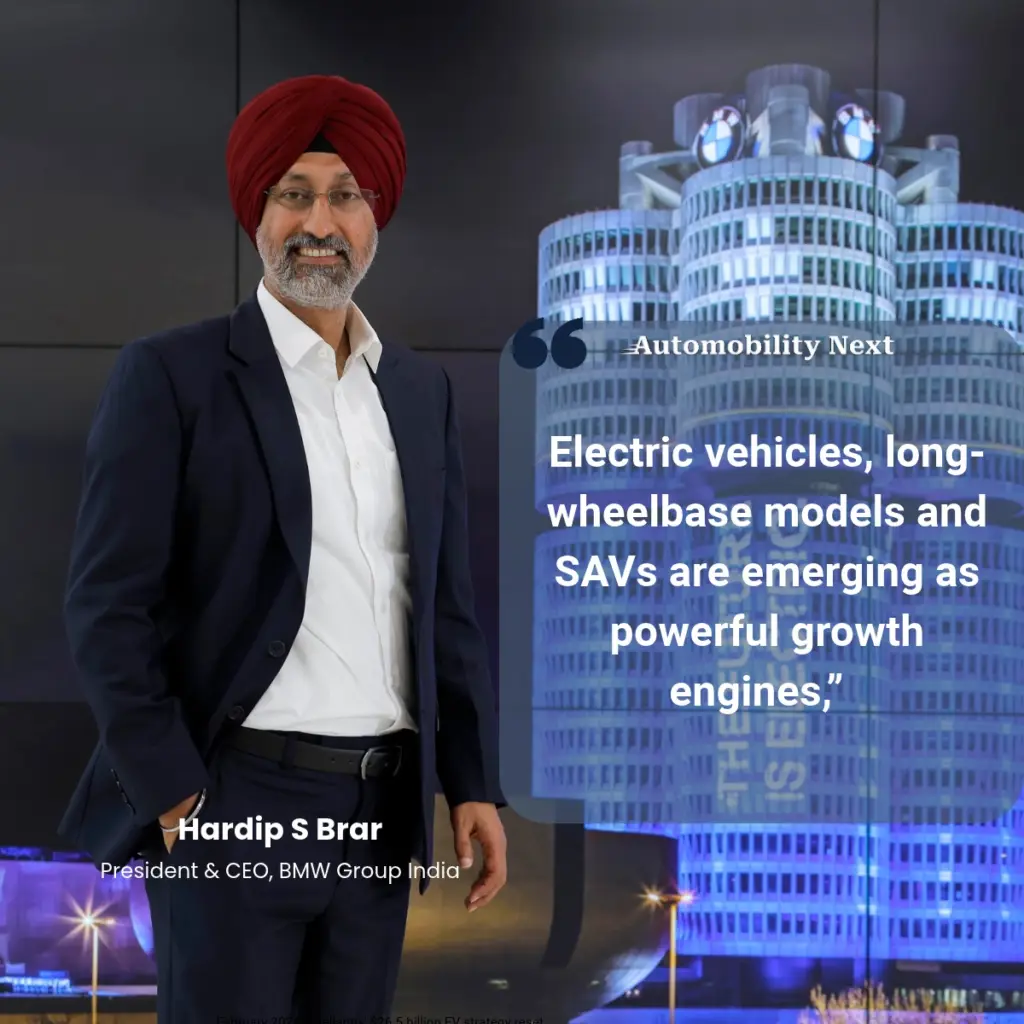
“Electric vehicles, long-wheelbase models and SAVs are emerging as powerful growth engines,” says Mr Brar. BMW Group India grew 17% in the first half of 2026, with EV sales up 78%, long-wheelbase models up 24% and SAVs up 35%; one in every four cars it sells is now an EV. “The message from the market is clear: customers are not simply buying more luxury cars; they are looking for more space, more technology, more sustainability and an ownership experience that feels distinctly personal.”
Each newcomer is aiming at a gap. BMW has no Maybach rival between its 7 Series and Rolls-Royce; Alpina fills it, gains most from the EU duty cut and needs no network of its own. “Alpina can bring top-end flagships through the existing BMW channel, which is expanding,” says Mr Bhatia. BMW has not confirmed its plans.
For Hyundai, Genesis is about margin. “Perhaps an opportunity to launch our luxury brand, because we have strong credibility,” José Muñoz, chief executive of Hyundai Motor Company, told investors.
Local assembly would let a GV80 undercut a Mercedes GLE or BMW X5, but the badge is a risk. In September Hyundai dispatched nine Ioniq 5s and Kia not a single EV6. Denza has the steepest climb. Chinese technology does sell in India: BYD’s Sealion 7 has delivered more than 5,000 units in 20 months, and the MG Windsor was India’s best-selling electric car in 2025.
But MG played down its Chinese roots and is now majority Indian-owned. Denza has no such cover. Investment curbs keep BYD from building a factory, so Denza pays full import duty, outside the EU deal. “With this brand, we are taking an important step towards addressing the growing demand for distinctive luxury mobility experiences,” said Rajeev Chauhan, senior vice-president at BYD India, in a statement after the launch. Yet Ipsos found Indian buyers wary of Chinese brands, and nobody cares more about the badge than buyers spending INR 90 lakh or more. Denza looks set to stay a niche.
So who leads?
On the evidence, the Europeans. They hold four-fifths of the market, assemble locally and will import their flagships more cheaply from 2027. Genesis is best placed to gain between INR 60 lakh and INR 1 crore, and Chinese brands below INR 60 lakh, where technology outweighs the badge. A fair base case gives the newcomers 5-8% of the market by 2030: enough to squeeze German margins, not to unseat the Germans.
Nor will prices fall across the board. At 10% duty instead of 110%, an imported European car could cost about 48% less. But imports are only about 5% of BMW’s Indian sales. “The distinction for the story is that the trade deal can expand choice faster than it expands demand,” says Mr Bhatia.
JATO expects about 70,000 units a year by 2030 (range 68,000-75,000), implying 5.5-7.6% annual growth. BMW’s hope of a 5% share would mean about 230,000 units, more than three times that. Closing the gap depends on first-time buyers. “First-time luxury buyers account for nearly 49% of our customer base,” Hardeep Singh Brar, President and CEO of BMW Group India told media earlier.
For now, the newcomers are betting on value, not volume, in a market the Germans still run. Choice will widen faster than prices fall.
Related Stories
BMW to launch Alpina in India in 2027, media reports say | Why the top end matters
BMW Group plans to bring Alpina to India in 2027 as a standalone ultra-luxury brand, according to media...
Saudi’s Ceer borrows SAR 2.6 billion for its factory push: Can a premium launch win a market BYD is running away with?
Saudi’s Ceer borrows SAR 2.6 billion for its factory push: Can a premium launch win a market BYD...
India beats US in electric car penetration July-October. But what does it really mean?
India has overtaken the United States on electric car penetration, and the gain held for a full quarter....