


Delhi Police impound 17,506 end-of-life vehicles under the age and BS-III rules, 97% of them two-wheelers: Does it clean the air?
The seizures cover petrol vehicles over 15 years old and diesel over 10. Every overage scooter falls under the BS-III-and-older scrapping rule, while most overage diesel cars are BS-IV. Our estimate puts the air-quality gain at about 0.1% of winter PM2.5.
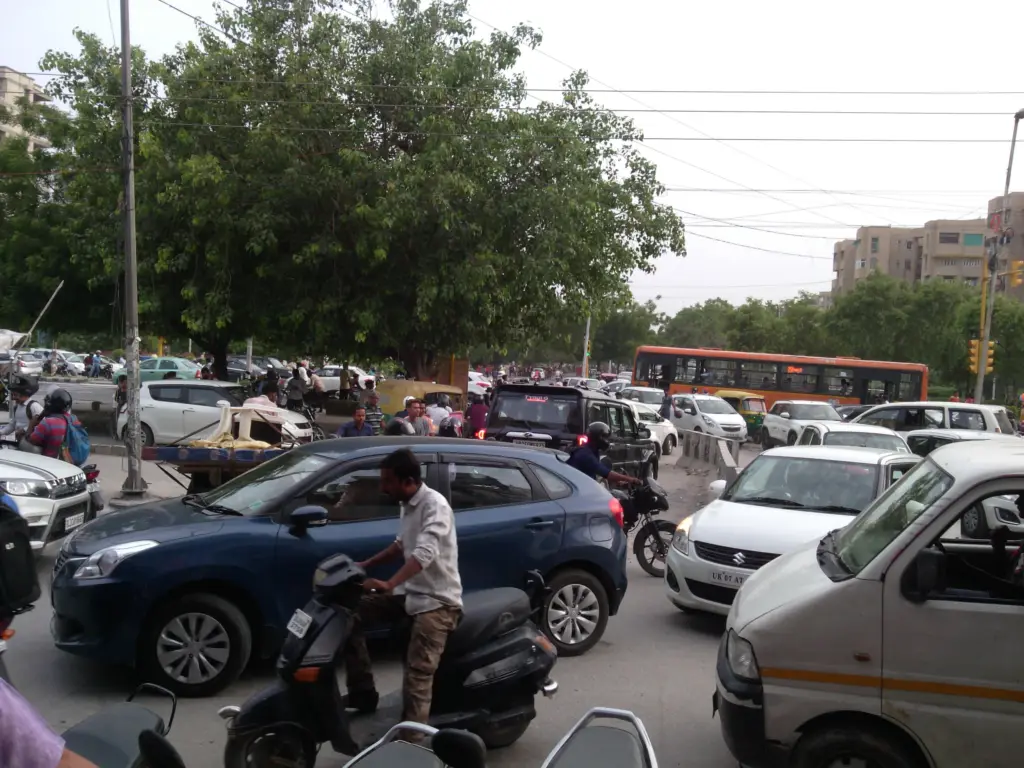
Delhi Traffic Police impounded 17,506 end-of-life vehicles between January 1 and November 2, according to police data cited in media reports. Of these, 16,918 were two-wheelers and 164 were cars. The remaining 424 were mostly three-wheelers.
Why they were seized. The vehicles were seized because of their age, not because they failed an emission test. Delhi treats petrol vehicles older than 15 years and diesel vehicles older than 10 as end-of-life, under National Green Tribunal orders that the Supreme Court upheld. Such vehicles may not run or park in public places.
A Transport Department notice on February 14 tightened enforcement: vehicles “of BS-III and below emission norms” found on the road or parked “shall be impounded and scrapped without further notice.” The stated aim is cleaner air, and police also cite road safety.
Which vehicles, under which norms.

The police data does not split seizures by emission norm, but the dates on which each norm took effect do most of the work. Two-wheelers moved to BS-III in April 2010 and to BS-IV only in April 2017. That means every petrol two-wheeler more than 15 years old is BS-III or older, so the no-notice rule covers all of them. Cars in Delhi moved to BS-IV in April 2010, so most diesel cars aged 10 to 16 years are BS-IV and outside the rule. That helps explain why cars are under 1% of seizures.
Seizures are also lower than last year. Police data cited in media reports showed 19,478 seizures in 2025 up to October 26, a window a week shorter than this year’s. In the same period of 2024, just over 5,000 were seized.
Does it help the air? A 2018 ARAI-TERI study found that transport produced 28% of Delhi’s winter PM2.5, and two-wheelers about a quarter of that, or roughly 7% of the total. The 16,918 seized two-wheelers are about 0.3% of Delhi’s roughly 58 lakh. Even if each one polluted five times as much as an average bike, removing them would cut winter PM2.5 by about 0.1%. Many were seized while parked, so the real effect is probably smaller.
Who pays.
For many owners an old scooter is cheap daily transport. Impounded vehicles go to a scrapper. Owners can get a no-objection certificate to move a vehicle out of the NCR, but in May media reports found only one working authorised scrapping facility in the city.
The rule measures age, not emissions, and national law sets no age limit for vehicles that pass fitness tests. In 2025, Lieutenant Governor V K Saxena called it “irrational” to treat a roadworthy 10-year-old diesel vehicle as finished in Delhi.
Bigger sources sit elsewhere. A June 2026 study by IIT Delhi, TERI and the Air Pollution Action Group found that heavy-duty vehicles produce 23% of daily transport emissions, and 61% at night. On November 1 alone, police turned back 714 vehicles that did not meet BS-VI norms and impounded 38. For every vehicle impounded, about 19 were turned away.
The public-interest test is how much pollution a measure cuts for each livelihood it disrupts. Emission testing, stricter checks on trucks, and help for riders to switch to electric two-wheelers would score better than counting a vehicle’s age.
Related Stories

BMW to launch Alpina in India in 2027, media reports say | Why the top end matters
BMW Group plans to bring Alpina to India in 2027 as a standalone ultra-luxury brand, according to media...
India’s EV charging race is moving beyond charger counts to network performance
SIAM's first National EV Charging Day puts operational reliability, commercial viability and expansion beyond metros at the centre...
Why are luxury car brands Alpina, Genesis and Denza rushing to India?
A 52,000-unit market with a fast-growing top end, 944,000 millionaires and EU duty cuts on the way is...