



Can BYD’s Denza dent the Germans’ grip on India’s 52,000-car luxury market?
Chinese brands have unsettled German carmakers in China and are gaining ground in Europe and the Gulf. India, however, presents a different challenge, with tighter investment rules, import restrictions and an established local manufacturing base.
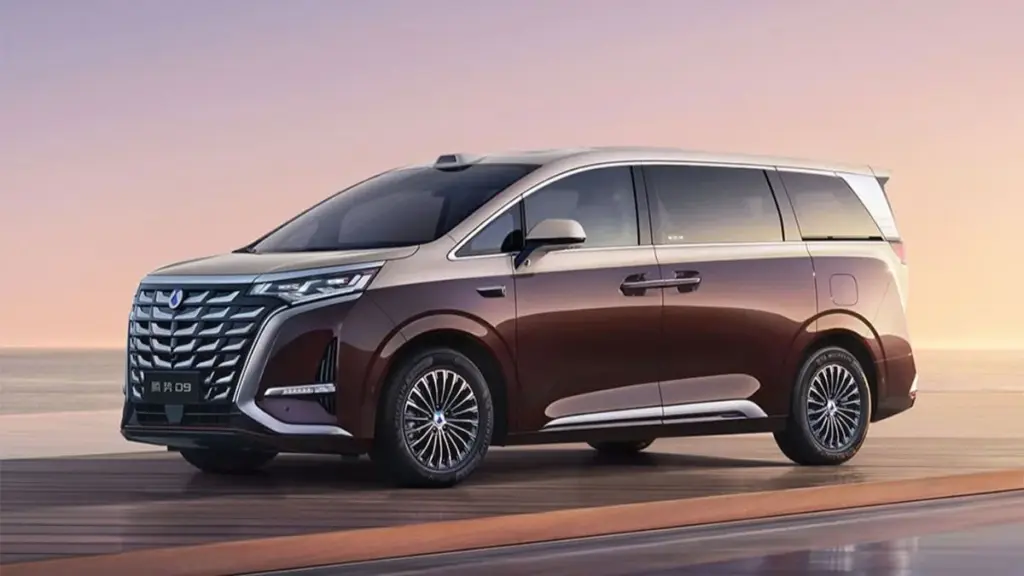
Chinese brands have unsettled German carmakers in China and are gaining ground in Europe and the Gulf. India, however, presents a different challenge, with tighter investment rules, import restrictions and an established local manufacturing base.
BYD’s luxury brand Denza has entered a market that German and European carmakers have dominated for two decades. Its arrival raises a question that has become increasingly relevant across global automotive markets: can Chinese manufacturers replicate in India the gains they have made at the expense of established luxury brands elsewhere?
Denza made its India debut on November 13 with two imported electric models: the D9 luxury MPV, priced at ₹90 lakh ($95,800), and the Z9 GT shooting brake, at ₹1.56 crore ($166,000), both ex-showroom. The market it is targeting is relatively small but highly concentrated. About 52,000 cars priced above ₹50 lakh ($53,200) were sold in India in 2025, while BMW alone accounted for 38% of the segment in the first half of 2026.
The challenge for the German manufacturers is already visible in markets where Chinese brands have gained ground. China, their most profitable market, has become the clearest illustration of the shift. Sales at Volkswagen, Mercedes-Benz, BMW and Porsche fell between 30% and 41% in the April-June quarter. Chinese brands commanded 59% of China’s premium vehicle segment in the first half, helped in large part by their lead in electric vehicles, an area where the German manufacturers have struggled to keep pace.

Europe is witnessing a similar shift, albeit at a slower pace. Despite anti-subsidy tariffs, Chinese brands increased their share of the EU car market from 0.5% in 2021 to nearly 10% by spring 2026. When tariffs were imposed on battery electric vehicles, manufacturers adjusted their product mix towards plug-in hybrids, which remain exempt from the levies.
The Gulf has proved more receptive. With fewer trade barriers, Chinese manufacturers have expanded their presence even as regional vehicle sales fell by more than a fifth in the first half. Their market share rose from 14.1% to 19.8%, while their share of new vehicle sales in the UAE reached about 31%, compared with roughly 10% two years earlier. The United States, by contrast, has taken the opposite approach, banning connected Chinese vehicles from model year 2027, including those assembled on American soil.
India sits somewhere between these extremes. Chinese vehicles can be imported and sold, but the regulatory framework makes a larger manufacturing presence difficult. The easing of investment rules in 2026 applies only to global investors with incidental Chinese ownership below 10%, rather than direct Chinese entities.
Imported models are also subject to a limit of 2,500 units without local certification. That creates a structural disadvantage for newcomers against established luxury manufacturers, whose locally assembled models account for 95% of India’s luxury car sales.
Yet the Germans have a vulnerability in India that mirrors their difficulties in China: electric vehicles. India’s luxury EV sales rose 61% to a record 5,404 units in FY2026, even as Mercedes-Benz reported a 10% decline in its electric vehicle sales. The gap gives Denza an opening, particularly in a market where premium buyers are increasingly being offered electric alternatives but where established brands have yet to translate their conventional luxury-car dominance into the same position in EVs.
The India-EU trade agreement could eventually alter the competitive landscape by reducing duties on 20,000 European-made electric vehicles. But the tariff concessions will come only five years after implementation, leaving imported German EVs subject to existing duties and pricing pressures in the intervening period. That gives Denza an opportunity to compete for buyers in a segment where price, technology and product differentiation could matter as much as the badge on the bonnet.
A quick reversal of the established order, however, looks unlikely. Denza’s immediate opportunity lies in a narrow but potentially valuable market for electric luxury MPVs and high-performance EVs, where annual sales are more likely to be measured in hundreds than thousands. Its ability to move beyond that niche will depend on more than the appeal of its products. It will require a viable route to local manufacturing, a stronger retail and service network and the confidence of buyers accustomed to established European luxury brands.
For the German manufacturers, the risk is not necessarily an immediate loss of market leadership but the possibility of allowing Chinese competitors to establish themselves in the fastest-changing part of the luxury market. India may be more difficult for BYD than China or the Gulf, but the barriers protecting incumbents will not remain a substitute for competitive electric vehicles indefinitely. The longer-term contest will turn on whether Denza can find a way around India’s manufacturing constraints and whether the Germans can close their electric-vehicle gap before Chinese brands gain a stronger foothold.
Related Stories

India’s First E85 Car Found Three Buyers in Its First Month: An Analysis of the Supply-First Ethanol Gamble
E85 reached 48 pumps in June 2026, well ahead of any mandate forcing its use. The first car...

Five Pillars for an Industry Under Siege: A View from Four Decades
Forty years after joining the auto industry, Vinay Piparsania argues that geopolitics, policy, product, energy and supply chains...