


India’s EV charging race is moving beyond charger counts to network performance
SIAM's first National EV Charging Day puts operational reliability, commercial viability and expansion beyond metros at the centre of India's infrastructure agenda as EV penetration rises.
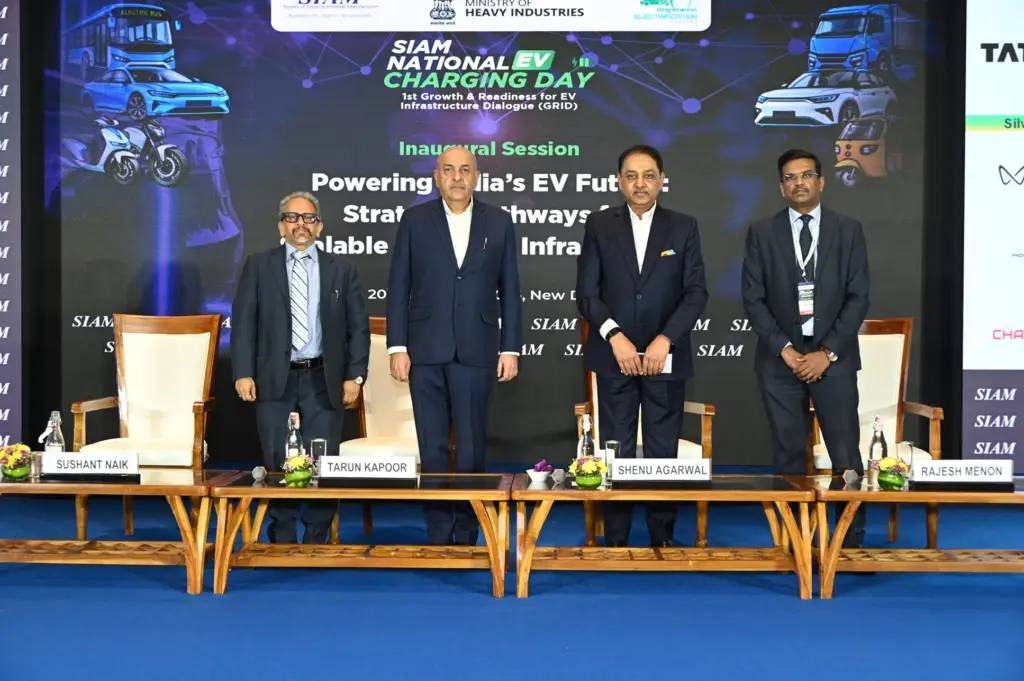
India’s electric mobility transition is entering a phase in which the availability of charging infrastructure, rather than vehicle adoption alone, will determine how quickly electrification can scale. Automakers and policymakers are increasingly shifting the focus from installing chargers to ensuring they are operational, accessible, adequately powered and commercially sustainable.
At its first National EV Charging Day, organised in New Delhi on Friday, the Society of Indian Automobile Manufacturers (SIAM), with support from the Ministry of Heavy Industries, brought government, automakers, charging operators and power-sector stakeholders together to discuss the next phase of infrastructure deployment.
Union Heavy Industries Minister H D Kumaraswamy said charging infrastructure must be measured by its operational availability, capacity, accessibility and ease of payment, rather than the number of stations sanctioned or installed. He called for expansion beyond metropolitan centres to smaller towns, rural areas, industrial districts, tourism routes and economic corridors.
The scale of the requirement is growing with EV penetration rising from 0.7% in FY20 to 8.2% in FY26, according to SIAM president and Ashok Leyland chief Shenu Agarwal. He said infrastructure development must keep pace with vehicle adoption, identifying power availability, space, vehicle segments, platforms and partnerships as priorities for expansion.

The government is also pushing deployment through PM E-DRIVE, under which approximately 9,000 charging stations are being set up, with around ₹900 crore sanctioned to state governments for infrastructure development, Additional Secretary, Ministry of Heavy Industries, Hanif Qureshi said.
The challenge, however, extends beyond charger deployment. Ministry of Power guidelines envisage charging stations every 25 km on highways and facilities for buses and trucks every 100 km. Heavy commercial vehicle charging will require coordinated investments in grid capacity, distribution infrastructure, land availability and charging systems suited to industrial, mining, steel and port operations.
State-level implementation, charger uptime, electricity tariffs and utilisation will increasingly determine the economics of charging operators. The industry discussion also highlighted the need for partnerships between automakers, oil marketing companies, DISCOMs, infrastructure operators and local authorities.
India’s charging infrastructure race is therefore moving into a more demanding phase: building a network that is not merely visible on maps, but dependable enough to support everyday mobility and commercial EV operations.
Related Stories
Ford is now making LFP battery cells in Michigan, at about 40 cells a minute, using technology licensed from China’s CATL.
The plant was first planned in 2023 at USD 3.5 billion (about INR 32,900 crore) and 35 GWh....
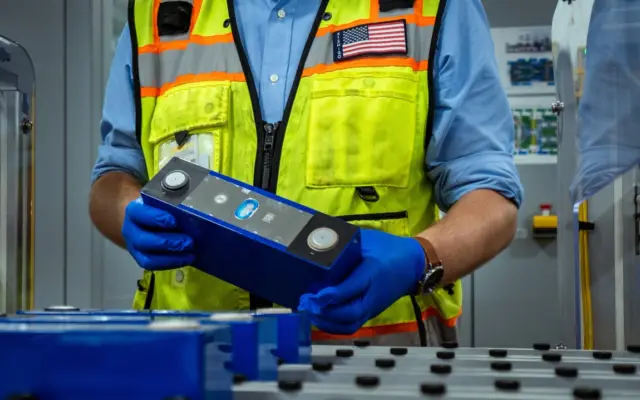
Ford starts LFP cell production in Michigan, using Chinese technology to localise batteries
Ford starts LFP cell production in Michigan, using Chinese technology to localise batteries Ford Motor has begun producing...

Saudi’s Ceer borrows SAR 2.6 billion for its factory push: Can a premium launch win a market BYD is running away with?
Saudi’s Ceer borrows SAR 2.6 billion for its factory push: Can a premium launch win a market BYD...