


Africa Is Electrifying Two and Three Wheels. Is India Ready to Take the Lead?
Africa Is Electrifying Two and Three Wheels. Is India Ready to Take the Lead? With Africa accounting for an estimated 1.72 million of India's two-wheeler exports in the first 11 months of FY26, the shift towards electric motorcycles and three-wheelers could open a new market for Indian OEMs
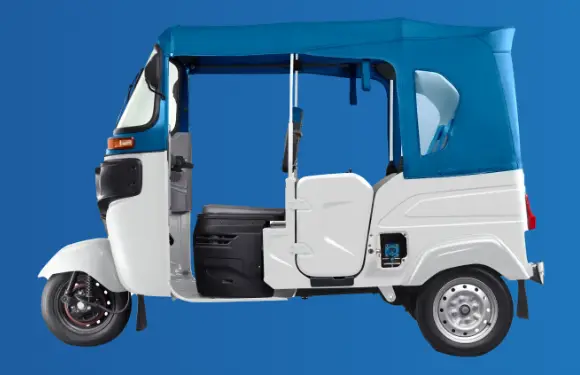
With Africa accounting for an estimated 1.72 million of India’s two-wheeler exports in the first 11 months of FY26, the shift towards electric motorcycles and three-wheelers could open a new market for Indian manufacturers and component suppliers. But Chinese competition and local assembly will determine who captures the opportunity.
Africa’s electric mobility transition is taking a different route from Europe and other developed markets. Rather than beginning with passenger cars, electrification is gaining traction in motorcycles and three-wheelers that serve as essential tools for passenger transport, deliveries and livelihoods.
For India, this could be a significant opportunity. Africa accounted for 36.3% of India’s two-wheeler exports in April-February FY26. Applying that share to India’s total exports of 4.747 million units during the period puts estimated shipments to Africa at approximately 1.72 million vehicles. The scale of this existing trade relationship gives Indian manufacturers an established market presence as the continent begins electrifying its vehicle fleet.

The shift is already visible in East Africa. According to the International Energy Agency, electric two-wheeler sales across Africa increased from fewer than 1,000 in 2020 to around 70,000 in 2025. Uganda recorded more than 30,000 sales, while Kenya crossed 25,000.

The opportunity extends beyond motorcycles. Electric three-wheelers are finding applications in passenger transport, agriculture, goods movement and last-mile logistics. Kenya’s electric three-wheeler registrations increased from 39 in 2023 to 517 in 2025 and reached 1,965 by June 2026.
For Indian manufacturers, the potential spans several vehicle categories.
Electric motorcycles and commercial two-wheelers represent an immediate opportunity. In the three-wheeler segment, L5-category passenger and cargo vehicles could address demand for electric tuk-tuks, delivery vehicles and utility tricycles. L3-category two-wheelers also offer opportunities in personal and commercial mobility, although African markets follow their own vehicle homologation standards.

The component opportunity could be equally significant. Demand is likely to extend to tubular-steel frames, reinforced chassis, suspension systems, axles, braking systems, electric motors, controllers, power electronics and battery-management systems. Vehicles operating on difficult roads and carrying heavy loads will require durability and low maintenance costs.
Bajaj Auto, TVS Motor and Mahindra Last Mile Mobility have relevant manufacturing and product capabilities. Indian component suppliers could also build relationships with African assemblers and fleet operators.
But the opportunity is not uncontested. Chinese manufacturers are already supplying electric motorcycles and three-wheelers, while companies such as Spiro, Roam and Ampersand are building local assembly, battery-swapping and fleet ecosystems.
For India, the challenge will be to move beyond exporting finished vehicles. Competitive pricing, local assembly, financing, battery-swapping compatibility and after-sales networks will determine market access. Africa’s electric mobility market is still developing, but its commercial applications offer a distinctive opportunity: one in which India’s strengths in affordable two- and three-wheelers and automotive components could prove more valuable than its ambitions in electric passenger cars.
Related Stories
CBAM Casts a Shadow Over India’s $6.8-Billion Auto Component Exports to Europe, and Over European Carmakers Too
Europe’s carbon levy does not cover cars or car parts, but it taxes the metals they are made...