


Ola Electric’s cost reset gathers pace, but shrinking sales remain the bigger test
Ola Electric’s latest results point to a business becoming cheaper to run, but not yet one that is growing again. The electric two-wheeler maker narrowed its consolidated net loss to ₹362 crore in the September quarter from ₹418 crore a year earlier, even as revenue fell 39%.
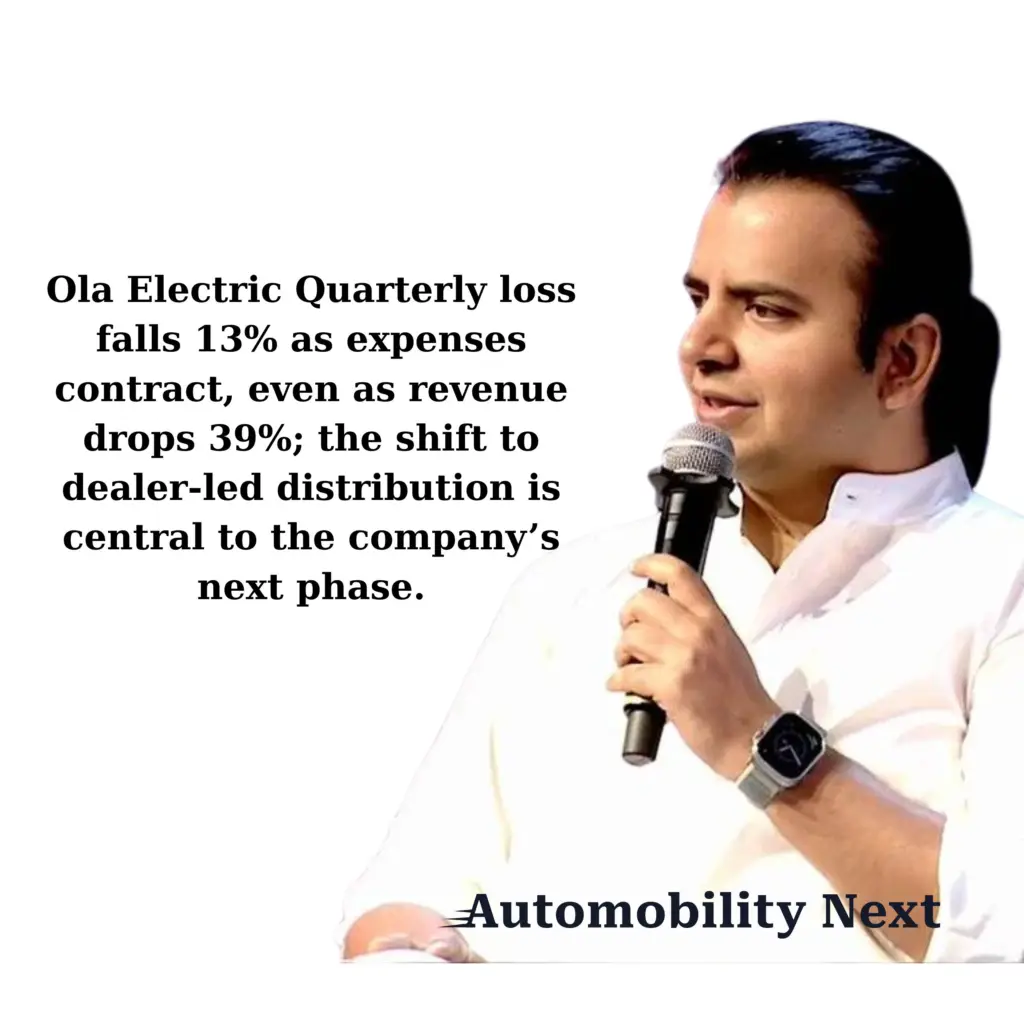
New Delhi: Ola Electric’s latest results point to a business becoming cheaper to run, but not yet one that is growing again. The electric two-wheeler maker narrowed its consolidated net loss to ₹362 crore in the September quarter from ₹418 crore a year earlier, even as revenue fell 39% to ₹421 crore. The divergence captures the central challenge facing the company: cost reduction is advancing faster than the recovery in sales.
Total expenses declined 28.4% to ₹639 crore, helped by workforce restructuring, lower warranty costs and tighter working-capital management. But the pressure on the top line remains pronounced. Ola sold 41,651 vehicles in the quarter, down from 51,775 a year earlier.
Consolidated gross margin also slipped to 29.93% from 30.9%, indicating that the improvement in the bottom line is not being driven by stronger product economics alone.
The more consequential change may be in how Ola sells and finances its vehicles. The company has moved towards a dealer-led distribution model, appointing 255 dealer partners operating more than 300 stores by Diwali. It has stopped taking orders through its direct-to-consumer stores from November 1 and expects most of these outlets to close by December.

The shift could reduce the capital tied up in retail inventory and improve working-capital efficiency, as dealers hold stock and pay when ordering vehicles. Ola says operating expenses will fall further as the transition is completed. It has also reduced total borrowings to ₹1,819 crore in September from ₹3,132 crore in December 2024, with auto-business borrowings down to ₹337 crore, according to its shareholder letter.
Management says supply-chain ramp-up, rather than demand, is now the constraint. That assertion will need to show up in registrations and revenue. With established rivals TVS Motor, Bajaj Auto, Hero MotoCorp and Ather competing for buyers, a leaner distribution network is only part of the answer.
Ola has made progress in reducing the cost of its business. The next test is whether that lower-cost structure can support a sustained recovery in volumes.
Related Stories
Ford Middle East Breaks Ground on New Business Operations and Technical Centre in hashtag Dubai, Strengthening Regional Presence
The 4,368-square-metre facility at EZDubai Logistics Hub will bring Ford’s product development, quality, training and operations teams under...

AI influences car buying, but 90% of consumers still purchase through dealerships: Bain & Company
Survey of 12,351 consumers highlights regional differences in buying priorities, EV adoption barriers and growing competition for automakers

EV Retails Hit Record 3.55 Lakh in October, Up 45%; E-Trucks Surge 163% YoY
Two-wheelers supply the volume, commercial vehicles the growth rate; penetration slips from September as petrol-led festive demand returns