


Swap, Charge, Share: How Cross-Stakes Could Fix India’s EV Charging Headache
Picture this. Two of China's biggest EV rivals, who spent years fighting for the same buyer, suddenly decide to share their charging stations. That is more or less what happened on September 28.
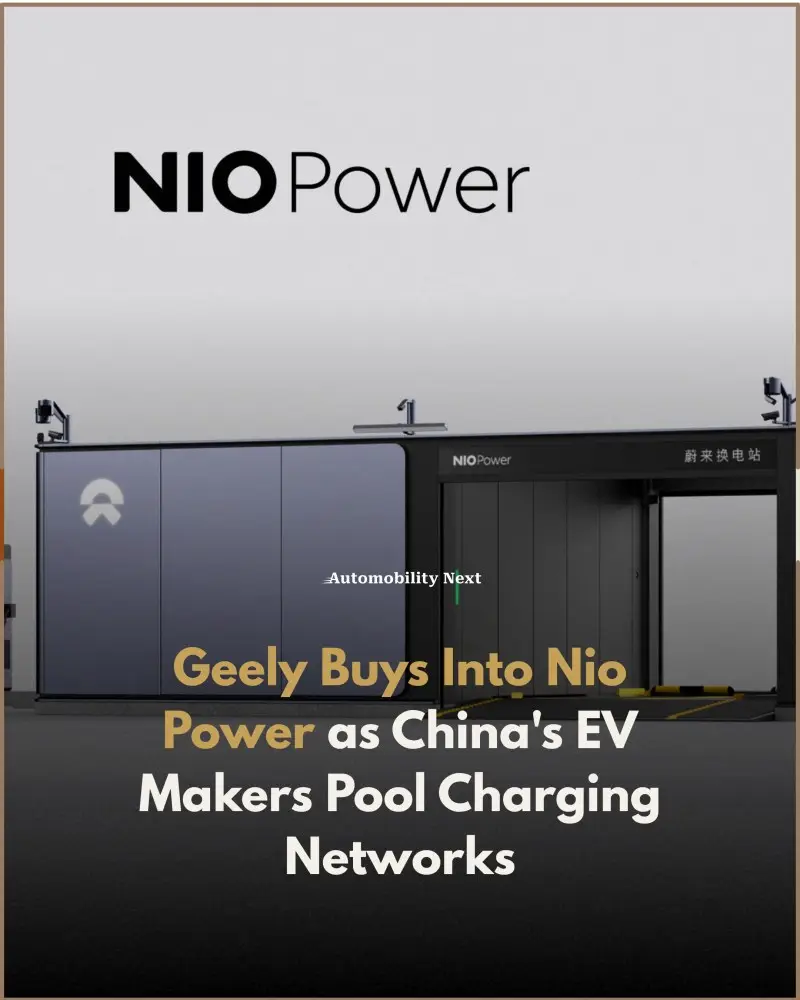
When rivals start sharing plugs
Geely Holding is taking a 30% stake in Nio Power, Nio’s battery-swapping arm. Geely isn’t paying mostly in cash, either. It is handing over its entire battery-swap business for commercial fleets, Yiyi Power (Yiyi Huandian), plus 640 million yuan (about $95 million). The deal values Nio Power at roughly 16 billion yuan, or $2.4 billion.

And the love flows both ways. Nio China is picking up a 10% stake in Zhejiang Haohan Energy, Geely’s charging company, which in turn will buy some of Nio’s charging assets. So Geely gets a big seat at the swapping table, Nio gets skin in Geely’s charging game, and Yiyi’s swap stations fold into Nio’s network.
The targets are not small. Nio Power wants 10,000 swap stations by 2030. Geely is aiming for 22,000+ charging stations with more than 100,000 connectors by the end of 2027. The two also plan to develop common battery-swap standards for passenger cars, and Geely will build its own swappable models.
In plain English: the swap station you pull into may soon not care which badge is on your bonnet.

Why this deal is a big deal
For years, the EV world ran on walled gardens. Every carmaker wanted its own chargers, its own app, its own loyalty loop. Great for the brand, terrible for the driver who is stuck at 8% with the “wrong” car.
The Geely–Nio tie-up flips that logic. Nio already runs a serious network, 3,790 swap stations as of February 2026, with a single-day record of 175,976 swaps. Bring in Geely, whose family includes Geely Auto, Zeekr, Lynk & Co, Volvo and Polestar, and that network suddenly has a far bigger pool of potential users.
The lesson is simple. Infrastructure is expensive, slow to build and brutal to fill with enough customers. Sharing it through cross-stakes spreads the cost and multiplies the utilisation. More cars per station means better economics for the operator and more stations for the driver. Everybody wins, except range anxiety.

Meanwhile, back in India: the charging headache
Ask any Indian EV owner about their biggest fear, and you’ll rarely hear “price” first. You’ll hear some version of: what if I get stuck?
The numbers explain why. India crossed roughly 29,000 public charging stations by early 2026, which sounds like a lot until you spread it across a country this size. And the network is fragmented. Car chargers mostly speak CCS2, many scooter networks are brand-locked, and drivers juggle half a dozen apps to find one working plug.
Then there’s the walled-garden problem, desi edition. Maruti Suzuki has quietly built a big network of dealership DC chargers, but as reports pointed out, they are locked to Maruti cars through its app. Ola’s Hypercharger network is also closed to other brands. Plenty of chargers, in other words, but not always your charger.
The government is trying to plug the gap. Under PM E-DRIVE, about ₹2,000 crore is set aside for roughly 72,300 public chargers, 48,400 of them for two- and three-wheelers. But public money alone won’t fix a problem that is as much about access as it is about count.
India’s own “frenemies” playbook
Here’s the good news. India isn’t waiting for a Geely–Nio moment. Oil companies, carmakers, two-wheeler giants and swap start-ups are already locking arms through equity, joint ventures and open-network deals.
The biggest of India’s charging and swapping alliances is Indofast Energy, a 50:50 joint venture between the oil major IndianOil and the swap-tech firm SUN Mobility. It runs more than 1,600 swap stations across 23 cities, has tie-ups with 32 OEMs and serves over 90,000 EVs, and it aims to reach 3,500 stations in FY27.
Hero MotoCorp, a major investor in Ather Energy, made the two companies’ fast-charging networks interoperable in December 2023. Vida riders can now use more than 4,600 fast-charge points in 320-plus cities, and the Ather Grid alone has over 5,000 points in 395 cities. Hero has also signed a strategic tech partnership with Taiwan’s Gogoro to bring its battery swapping to India, which opens a path to swap-ready mass-market scooters.
Carmakers are opening up their networks too. Under its “Open Collaboration 2.0” programme, Tata.ev has made its CCS2 network, built with Tata Power, ChargeZone, Statiq and Zeon, available to other brands. It targets 30,000 public points and 500 mega chargers by 2027, open to all EVs. Maruti Suzuki’s “e for me” app brings 13 charge-point operators and aggregators together, so drivers can find, book and pay for charging across networks in one place, and it targets 1 lakh points by 2030.
The swap players are growing as well. Honda’s own swap arm, e:Swap, serves both its scooters and e-rickshaw fleets and plans about 500 stations across Bengaluru, Delhi and Mumbai. Battery Smart runs a franchise-led swap network for e-rickshaws and two-wheelers that works with any OEM. It has more than 1,600 stations in over 50 cities and has passed 100 million swaps.
The Indofast joint venture is the closest Indian cousin of Geely–Nio: an energy major brings capital and fuel-pump real estate, a tech firm brings the swap stack, and dozens of vehicle makers plug into one network. If more carmakers follow Tata in opening their chargers, and the long-pending battery-swapping policy is finalised, Indian EV buyers could soon stop worrying about getting stranded.
Related Stories
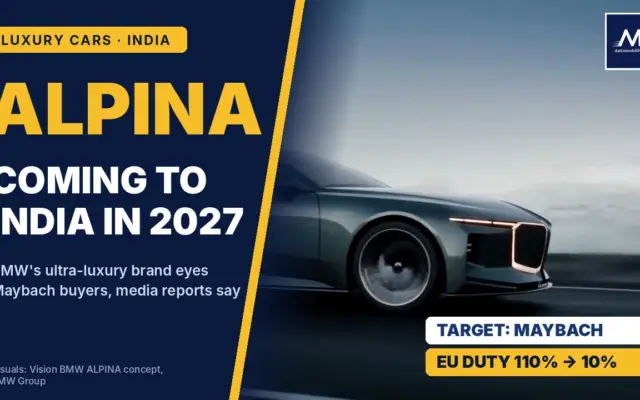
BMW to launch Alpina in India in 2027, media reports say | Why the top end matters
BMW Group plans to bring Alpina to India in 2027 as a standalone ultra-luxury brand, according to media...
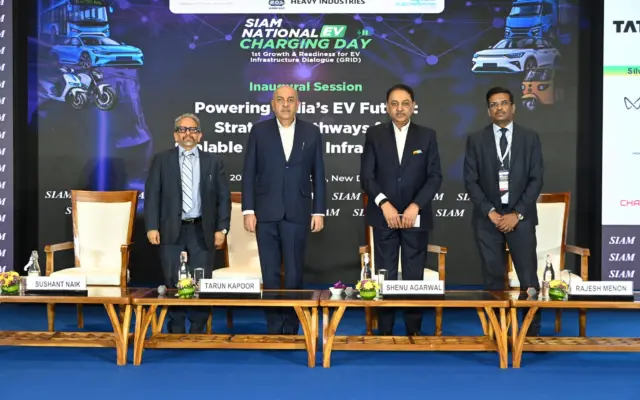
India’s EV charging race is moving beyond charger counts to network performance
SIAM's first National EV Charging Day puts operational reliability, commercial viability and expansion beyond metros at the centre...
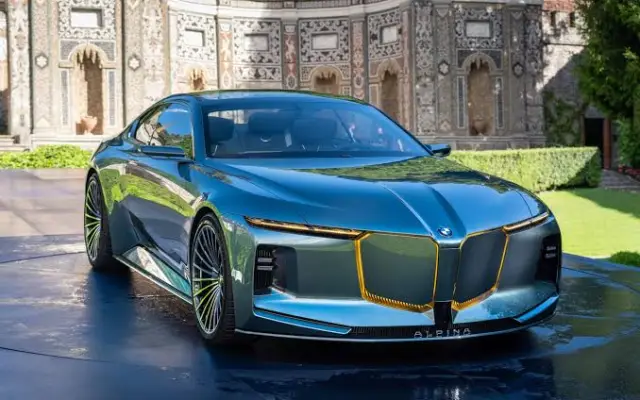
Why are luxury car brands Alpina, Genesis and Denza rushing to India?
A 52,000-unit market with a fast-growing top end, 944,000 millionaires and EU duty cuts on the way is...