


Global EV sales to grow just 11% in 2026, the slowest since 2020, Will combustion cars rule longer than expected?
More electric cars will be sold this year than ever before, but growth is slowing sharply, and the world's roads will take another two decades to catch up.
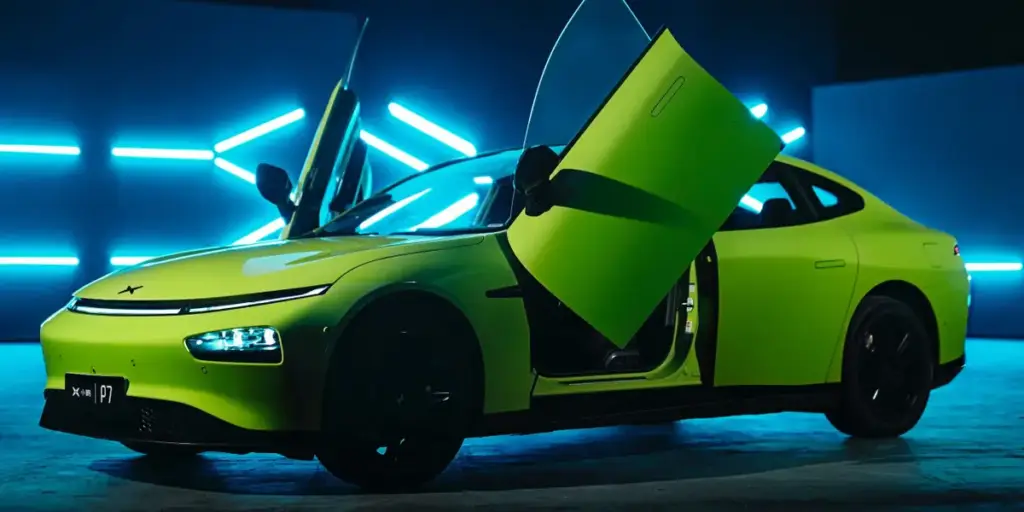
BloombergNEF’s Electric Vehicle Outlook 2026 expects over 23 million passenger electric vehicles (EVs) to be sold globally this year (up 11% from 2025). Global EV sales have grown seven-fold since 2020, but going by BNEF’s own figures, this year’s rise is the slowest since then. A year earlier, electric car sales grew by 20% globally to exceed 20 million in 2025, according to the IEA.
Why is growth slowing?
The base effect is part of it. Once a market sells more than 20 million units a year, even a large gain in volume shows up as a smaller percentage. But policy is doing most of the damage, in the two markets that matter most. China accounted for 63% of electric cars sold globally in 2025. BNEF blames its slowdown on the “tightening of the eligibility requirements behind EV incentives” and “the increasingly competitive and mature EV market.”
In practice, China will end its decade-long full purchase-tax exemption for new-energy vehicles (NEVs) from January 2026, introducing a 5% levy. Many consumers brought forward NEV purchases to take advantage of the then-current tax exemption before the 2026 policy change.
The result was a strong end to 2025 and a weak start to 2026: China’s domestic auto sales fell 23.1% year-on-year to 2.8 million units in Jan-Feb 2026, with NEV sales down 27.5%. The market is also close to saturation for early adopters: for all of 2025, NEV penetration rate was 47.9%. The US has gone into reverse. Global EV Sales Forecast: China will end its decade-long full purchase-tax exemption for new-energy vehicles (NEVs

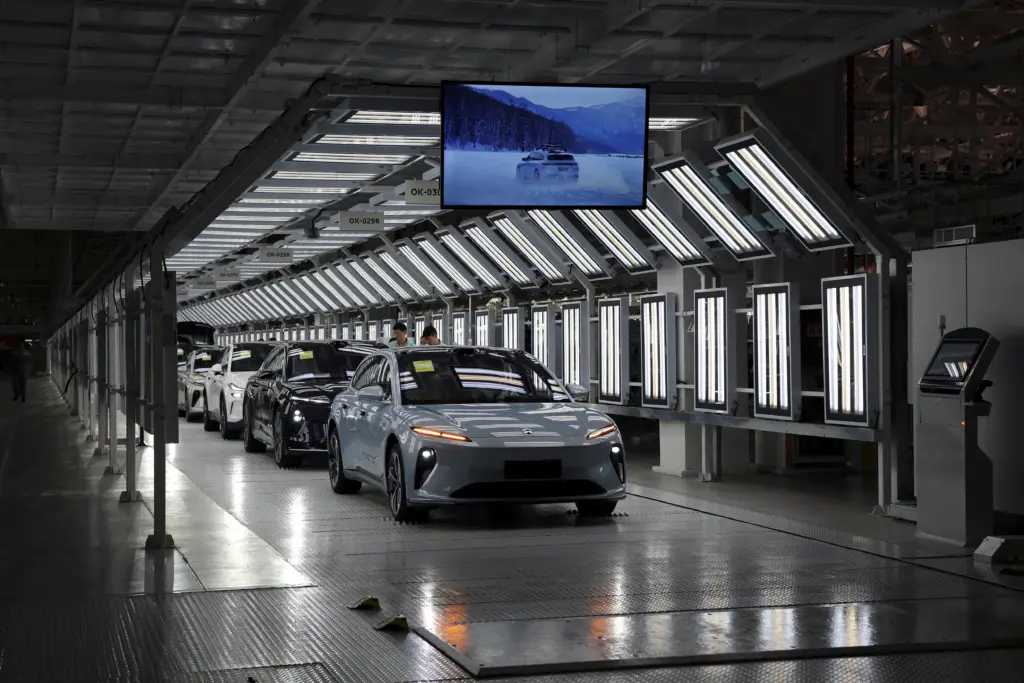
It is the market where sales are set to fall 19% this year, and BNEF says the reason has been the full withdrawal of federal regulatory support for electrification, including the rollback of national fuel-economy targets and the scale back of the Inflation Reduction Act. The early months of the year showed the hit clearly. Following policy changes in China and the United States, global sales of electric cars in the first quarter of 2026 fell by 8% compared with the same period in 2025.
Forecasts keep getting cut
A year ago, BNEF expected almost 22 million global passenger EV sales this year, a jump of 25% from 2024. Its own data now puts 2025 at about 20.9 million, below that forecast. In January 2026, BloombergNEF expected drivers to buy 24.3 million passenger EVs this year, an increase of only 12% on 2025. By June it had trimmed that to 23.3 million.
The long-term view has been cut as well. “BNEF has reduced its long-term and short-term passenger EV adoption outlook for the second year in a row.” The cut is sharpest for the US: EVs are now expected to account for 17% of US passenger vehicle sales in 2030, according to BloombergNEF’s latest outlook for battery-powered vehicles. That’s down from an estimated 27% in last year’s forecast and far below 2024’s projection of 48%.
What other forecasters say
The IEA arrives at a similar sales number. It projects global electric car sales are expected to rise again in 2026, reaching 23 million and accounting for close to 30% of all cars sold worldwide. Its mid-year update is a little more upbeat. Electric car sales rebounded in the second quarter of 2026, even as global car sales declined. Sales of electric cars were 4% higher year-on-year (y-o-y) and 35% above the first quarter of 2026. The IEA now expects EVs to reach 29% of total car sales worldwide in 2026, one percentage point higher than what was projected in the Global EV Outlook 2026.
Where growth is still strong
Europe is up about 20%, according to BNEF. Emerging markets are moving fastest of all: “Nearly half of all cars sold in Singapore in 2025 were electric,” followed by Vietnam (39%), Thailand (27%) and Turkey (22%). Turkey’s passenger EV sales more than doubled in one year. Fuel prices could add a push. The war in Iran and resulting increase in prices at the pump have boosted consumer interest in buying an EV, though it is too early to draw a clear link with higher EV sales over the near-term, BNEF notes.
The bigger picture
Battery-electric cars make up nearly two in three EV sales. Buses (43%) and two- and three-wheelers (46%) lead the shift, while cars are at 27%, and vans and trucks at 13%. All four segments reach at least half of sales by 2035. Public chargers are up six-fold since 2020, to about 7.9 million, with China hosting seven in ten. Battery demand grows about 27% to roughly 2,000 GWh, led by commercial vehicles and storage rather than cars.
Sales flip by 2035, but the cars on the road take until 2047. BNEF expects total road fuel demand expected to peak in 2029, and 645 million tailpipe passenger vehicles will still be on the road in 2050. For automakers, oil companies and policymakers, the EV transition is still happening, but it now depends far more on policy than on momentum.
Related Stories

Mahindra Last Mile Mobility eyes IPO within 18 months; joins growing EV listing pipeline
Mahindra Last Mile Mobility is considering an IPO within 18 months to fund manufacturing expansion and new electric...
Africa Is Electrifying Two and Three Wheels. Is India Ready to Take the Lead?
Africa Is Electrifying Two and Three Wheels. Is India Ready to Take the Lead? With Africa accounting for...

CBAM Casts a Shadow Over India’s $6.8-Billion Auto Component Exports to Europe, and Over European Carmakers Too
Europe’s carbon levy does not cover cars or car parts, but it taxes the metals they are made...