


Caterpillar makes collision-warning technology standard on construction equipment
The US equipment major will make advanced collision-warning and mitigation systems standard on most new Cat construction machines during 2027, expanding the use of pedestrian detection and active safety technology.

Construction equipment manufacturer Caterpillar is making advanced collision-warning and collision-mitigation technologies standard on the majority of its new machines throughout 2027, moving safety systems previously offered as options into regular equipment specifications.
Announced on 16 November, the initiative covers its Collision Warning System (CWS) and Collision Mitigation System (CMS). Using smart cameras, the technology is designed to identify potential hazards, including workers and pedestrians in a machine’s path, particularly when reversing or operating with restricted visibility.
CWS alerts operators to potential collisions through visual and audible warnings. CMS goes further on supported machines, helping inhibit movement or automatically apply brakes, depending on machine configuration. Caterpillar is also integrating safety insights with its VisionLink platform, allowing fleet managers to review videos, identify recurring close-call locations and improve operator training.
Caterpillar is not the first manufacturer to make such technology standard. Japan’s Komatsu introduced its KomVision Human Detection and Collision Mitigation System as standard on specified hydraulic excavators in its domestic market in 2020. The system uses cameras to detect people around the machine and can restrict movement or stop the excavator under specified operating conditions. Caterpillar’s latest announcement is notable for extending its standardisation programme to the majority of its new construction machines rather than selected models.

The technology addresses a significant workplace hazard. US National Institute for Occupational Safety and Health data recorded 443 fatalities involving workers struck by vehicles or mobile equipment at road construction sites between 2003 and 2010. Of these, 143 involved reversing vehicles or equipment.
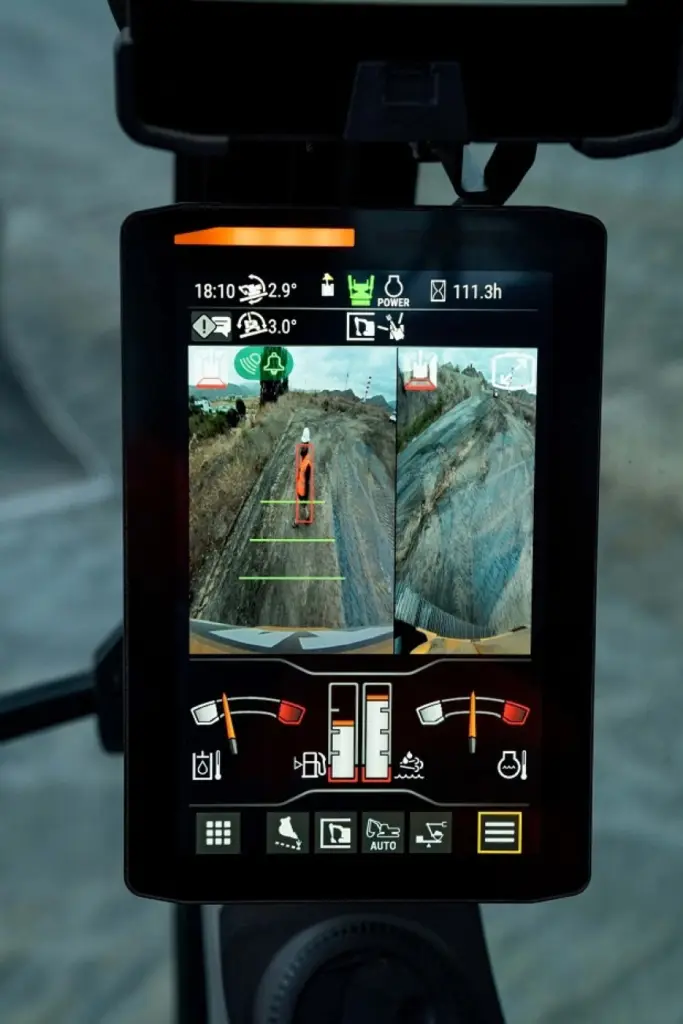
Caterpillar’s decision is a voluntary product and safety initiative, not compliance with a new regulation mandating these specific systems. Existing US OSHA rules require audible reversing alarms or a signalling observer in specified circumstances where rear visibility is obstructed.
The development could be relevant to India, where infrastructure construction and mining frequently bring workers and heavy machinery into close proximity. Caterpillar has not confirmed whether the same standard fitment will extend to its India-market machines.
Related Stories
Costlier steel, weaker farm incomes, a fading GST cut: Are India’s tractor makers pricing farmers out before the rabi season?
Costlier steel, weaker farm incomes, a fading GST cut: Are India’s tractor makers pricing farmers out before the...

Five Pillars for an Industry Under Siege: A View from Four Decades
Forty years after joining the auto industry, Vinay Piparsania argues that geopolitics, policy, product, energy and supply chains...