


More trucks, fuller factories, higher costs: Is Ashok Leyland paying a price for the freight boom?
India’s road-freight boom is proving to be a double-edged sword for Ashok Leyland. It is bringing customers back to the truck market, filling the company’s factories and strengthening its sales.
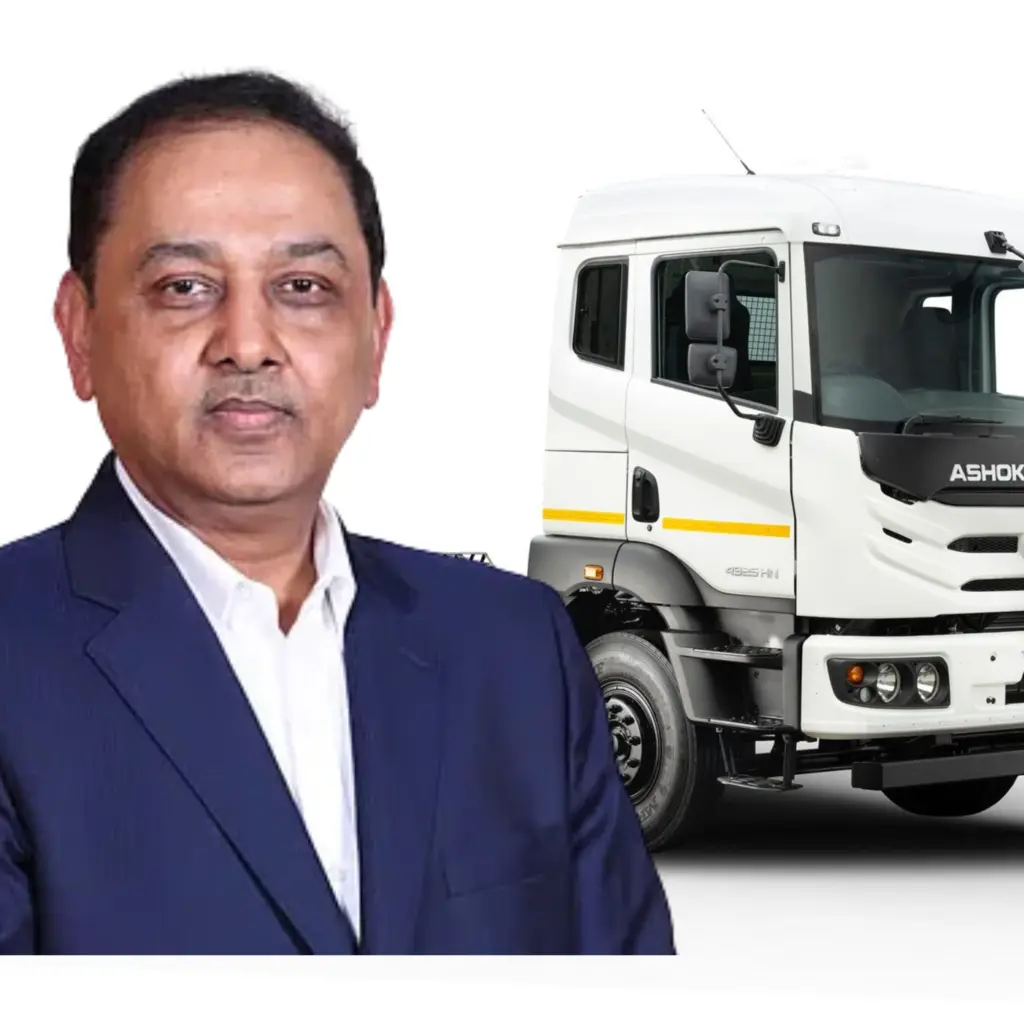
Higher freight rates are sending fleet operators back to the truck market, lifting Ashok Leyland’s domestic volumes by 34% and pushing factory utilisation close to 90%. But the same boom has raised the company’s cost of delivering each finished truck by more than 50% in a year.
India’s road-freight boom is proving to be a double-edged sword for Ashok Leyland. It is bringing customers back to the truck market, filling the company’s factories and strengthening its sales. But it is also making the business more expensive to run, exposing a cost pressure that could complicate its next phase of expansion.
Managing Director and CEO Shenu Agarwal told analysts on 16 November that the cost of transporting each finished vehicle from the factory to dealers had risen by more than 50% over the past year. The increase comes even as the company approaches 90% capacity utilisation, raising a strategic question: how much of the current demand surge can be converted into sustainable profitability?
The revival in freight economics began at the diesel pump. In May, oil marketing companies raised diesel prices for the first time in four years, starting with an increase of INR 3 a litre on 15 May, followed by further revisions. Diesel in Delhi now costs INR 95.20 a litre. Transporters passed on the higher fuel bill to customers. From 20 May, their association linked freight charges to diesel prices through a formula that adds 0.65% to freight rates for every INR 1 increase in diesel.

Higher freight realisations, alongside growing cargo movement, have improved the economics of operating trucks. Fleet owners earning more per trip are once again willing to invest in additional vehicles.
“There is an upward movement in freight rates, and that is really helping. There is a lot of upward movement in freight demand also,” Agarwal said.
The improvement is visible in Ashok Leyland’s numbers. Its domestic commercial vehicle volumes rose 34% to 59,575 units in July–September, while revenue increased 39% to INR 13,364 crore (USD 1.42 billion). Factory utilisation, which was around 70% a year earlier, is now approaching 90%. At the earlier utilisation level, the company had indicated that additional capacity was not immediately necessary.
But the freight recovery has a less favourable side for the manufacturer. Ashok Leyland pays transporters to move finished vehicles from its plants to dealerships. Consequently, the same increase in freight rates that encourages its customers to buy more trucks also raises the company’s own outbound logistics bill.
Material costs have added to the pressure, rising to 74.9% of revenue from 71.5% in Q1. EBITDA margin consequently declined to 10.1%, against 12.1% a year earlier. The challenge, therefore, is not simply to manufacture and sell more vehicles, but to ensure that higher volumes translate into stronger operating returns.
This cost equation is also influencing the company’s expansion plans. Ashok Leyland is attempting to extract more output from its existing facilities at Hosur, Ennore and Pantnagar, while evaluating the possibility of a greenfield plant. The geographical spread of its manufacturing network is an important consideration. None of its main truck plants is in eastern India, meaning vehicles supplied to that market have to travel considerable distances, adding to logistics costs.
On 5 November, West Bengal Chief Minister Suvendu Adhikari said his government had held preliminary discussions with Ashok Leyland about setting up a heavy-vehicle manufacturing unit at Singur. “We do not want to sign only an MoU and create a publicity stunt,” he said. Ashok Leyland has not confirmed a location for its proposed greenfield facility.
The broader question for India’s commercial vehicle manufacturers is whether the current freight recovery represents a durable change in demand or a particularly favourable phase of the trucking cycle. Higher cargo movement and better freight realisations are encouraging fleet operators to renew and expand their fleets. But if cargo growth slows or freight rates soften, the economics of new vehicle purchases could change just as quickly.
The pressure is not unique to Ashok Leyland. Tata Motors and VE Commercial Vehicles face similar challenges in moving finished vehicles across the country. For manufacturers, the location of production is increasingly as important as the capacity to produce.
Ashok Leyland now faces a strategic choice: invest in a plant closer to eastern India’s growing demand, or continue stretching its existing manufacturing network while absorbing the cost of transporting vehicles over longer distances. Building capacity at the top of a freight cycle carries its own risks, but delaying investment could mean losing ground if demand remains strong.
For now, the freight boom is giving Ashok Leyland the volumes it needs. The harder question is whether it can retain enough of the gains as those trucks make their way from factory gates to dealerships.
Related Stories
Tata’s €3.8 Billion Iveco Deal Buys Europe’s Bus Leader, an Engine Maker and a Margin Problem
Tata Motors has won access to Iveco's European and Latin American markets, its established technologies and its manufacturing...